Pilot plantExternal validation
0.036
pH units · overall external RMSEP
External validation with 23 independent batches and three different milk compositions.
All our applications share the same technology base: an optical signal inside the process plus a predictive model.
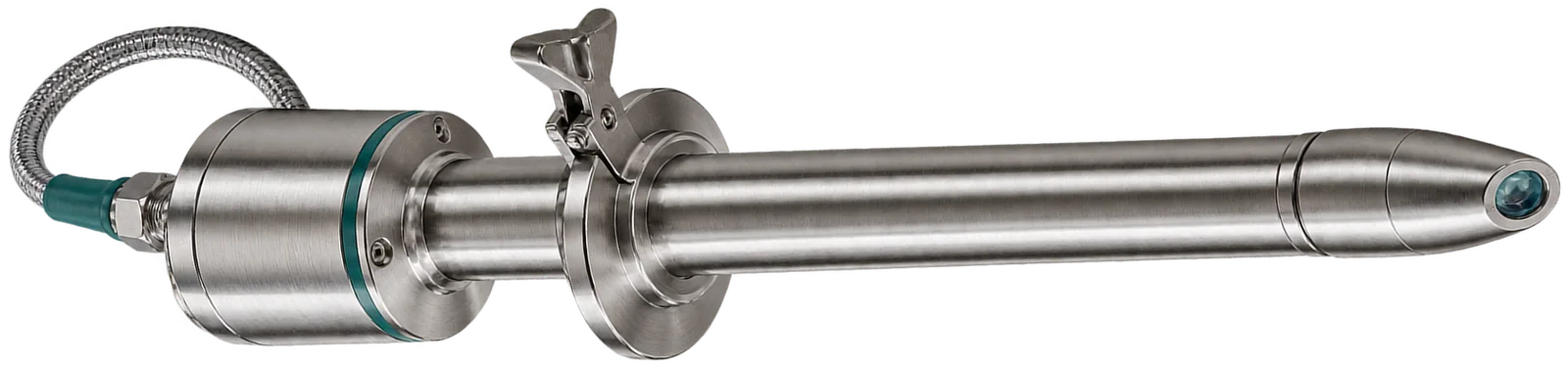
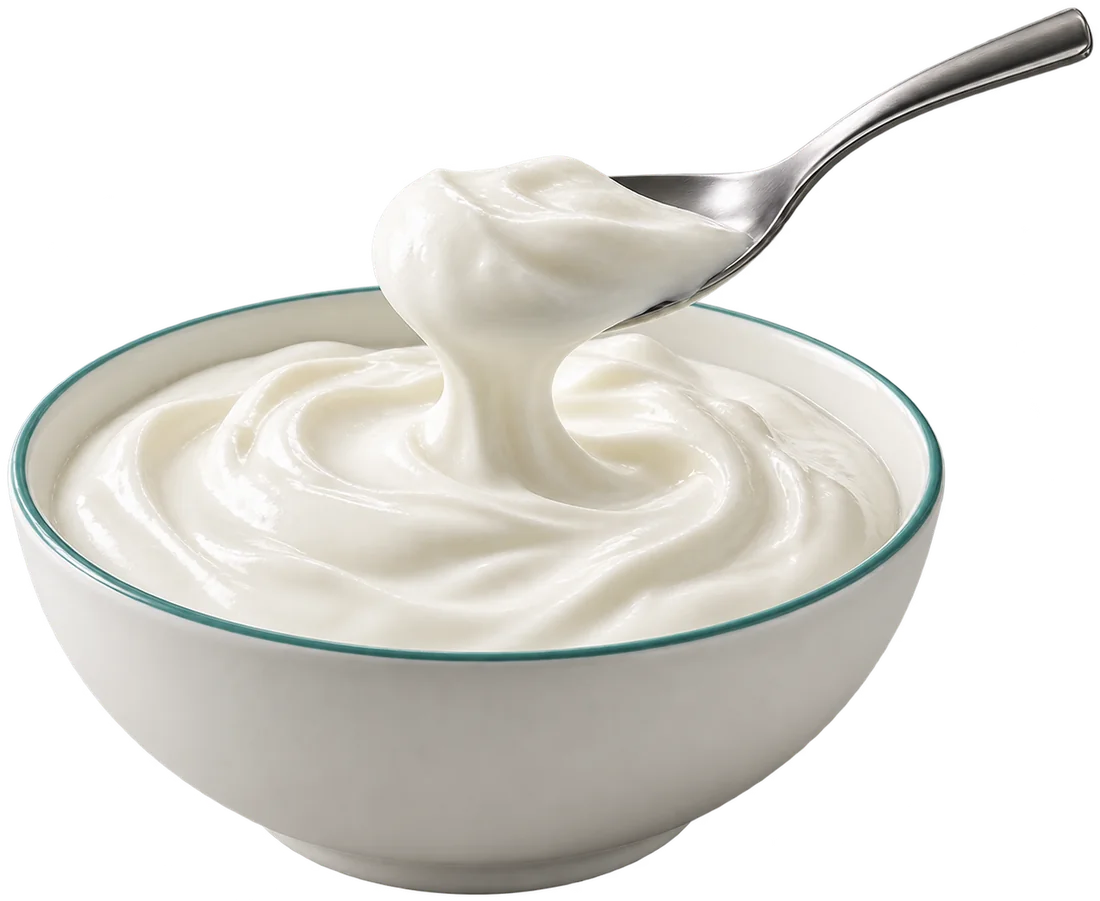
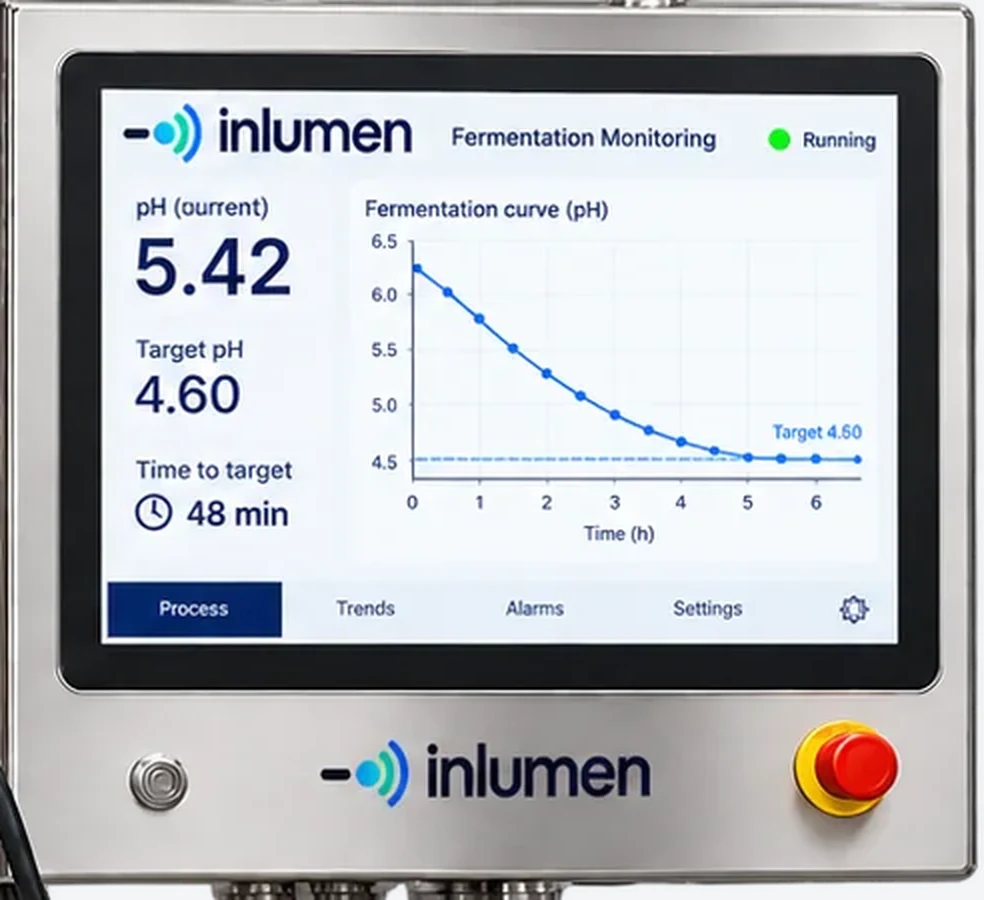
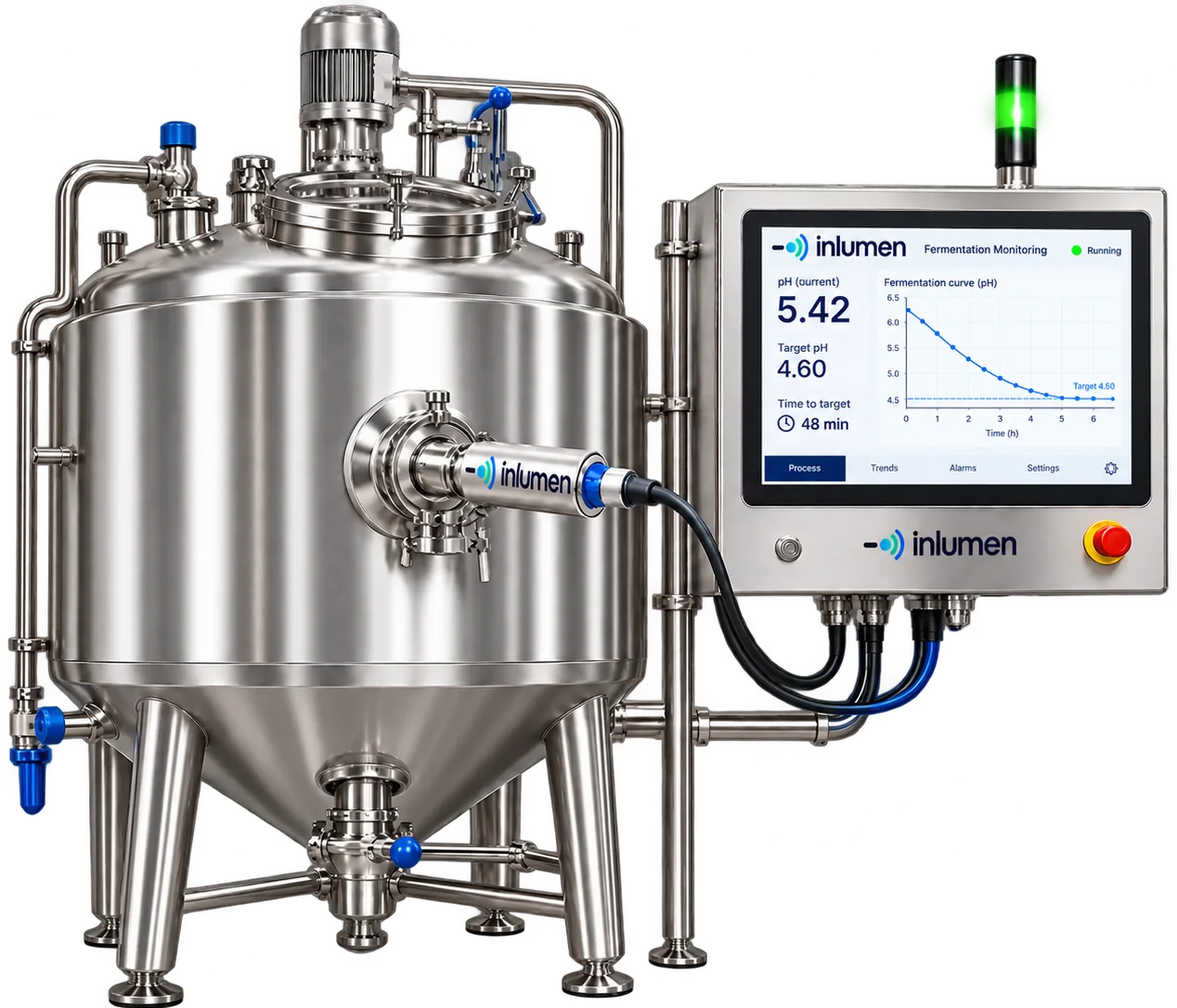
The probe illuminates the product through its sapphire window and records the returning light throughout the process.
As milk acidifies and the gel forms, the signal changes and the models translate it into process variables. pH estimation is the main, validated functionality; texture and other properties are in development.
The model estimates pH at every moment and anticipates when the process end point will be reached.
Data reaches the line PLC or the platform, with alerts on deviations while they can still be corrected.
Acidification curve
pH falls from 6.5 to 4.6 within a few hours. The optical prediction describes each batch’s complete curve; manual sampling only gives isolated points joined by straight lines.
The prediction becomes more robust below pH 5.2, precisely as the process approaches its end point.
Yogurt acidification curve
Illustrative diagram. Dashed section: prediction above pH 5.2, less robust; solid section: from pH 5.2 downwards.
We have demonstrated high predictive capability in the pilot plant and are progressing with its optimisation and industrial validation.
0.036
pH units · overall external RMSEP
External validation with 23 independent batches and three different milk compositions.
0.05–0.06
pH units · estimated accuracy
Industrial trials in a 5,000-litre tank under real production conditions.
Continuous improvement
We are optimising the models and calibrations to bring industrial accuracy closer to the pilot-plant result.
Overall external RMSEP: prediction error measured on 23 independent batches not used to train the model, made with three milk compositions.
Estimated accuracy of 0.05–0.06 pH units in trials on a production tank. This is not the same result as in the pilot plant.
Optimising models and calibrations, and more batches under industrial conditions.
| Functionality | Status | Detail |
|---|---|---|
| pH estimation in yogurt fermentation Main functionality | Validated | Pilot plant (RMSEP 0.036 pH) and trials in a 5,000 L industrial tank (0.05–0.06 pH). |
| Fermentation tracking and process end point Yogurt solution | Industrial validation | Part of the main solution; being optimised under industrial conditions. |
| Texture, firmness, elasticity and gel formation New functionalities | In development | Same optical reading, new models. |
| Curd cutting point (cheese) New application | In development | Monitoring coagulation in the vat. |
| Other food processes Platform | Research | Research lines of the UAB group. |
Platform in development. These applications stem from research by the OPTICmizing group at the UAB; the yogurt probe is the only one validated in an industrial tank to date.
Liu, S.; Contreras, F.; Alemán, R. S.; Marcía Fuentes, J.; Arango, O.; Castillo, M. Foods 2024, 13(17), 2766.
Read the paper (DOI)Technology based on patents owned by the Universitat Autònoma de Barcelona: US11041805B2 (granted in 2021) and EP3380826B1 (2025), with a new improvements application in 2026.
We will walk you through the validation methodology and how the system behaves in your process.